Protect Project Finances. Power Business Growth.
Quantity surveying and commercial management across the full project lifecycle.
Grounded in senior-level hands-on contract delivery in Aotearoa New Zealand.
Quantity Surveying
Protect project finances from tender to final account
Property Development
Support you to develop your business, not just buildings
Advisory & Consultant Support
Stay sharp, ready to grow
Training & Workshops
Turn practical contract knowledge into higher value, per project, per person
We Work in Your Business. You Work on Your Business.
When directors are no longer snowed under by contract risk, businesses grow.
Comprehensive Judgement
Forged from years inside complex contracts — across tenders, procurement, variations, claims, risks and final accounts.
We Have Sat Both Sides of the Table
Your position is stronger when it is built by someone who already knows how it will be tested.
Senior Capacity, Flexible Access
Experienced commercial management, embedded in your projects — so you lead the business forward, knowing the commercial side is covered.
Selected Projects
More projects →
80 townhouses/apartments, 3–5 storeys, 4 blocks. Built during Covid-19.

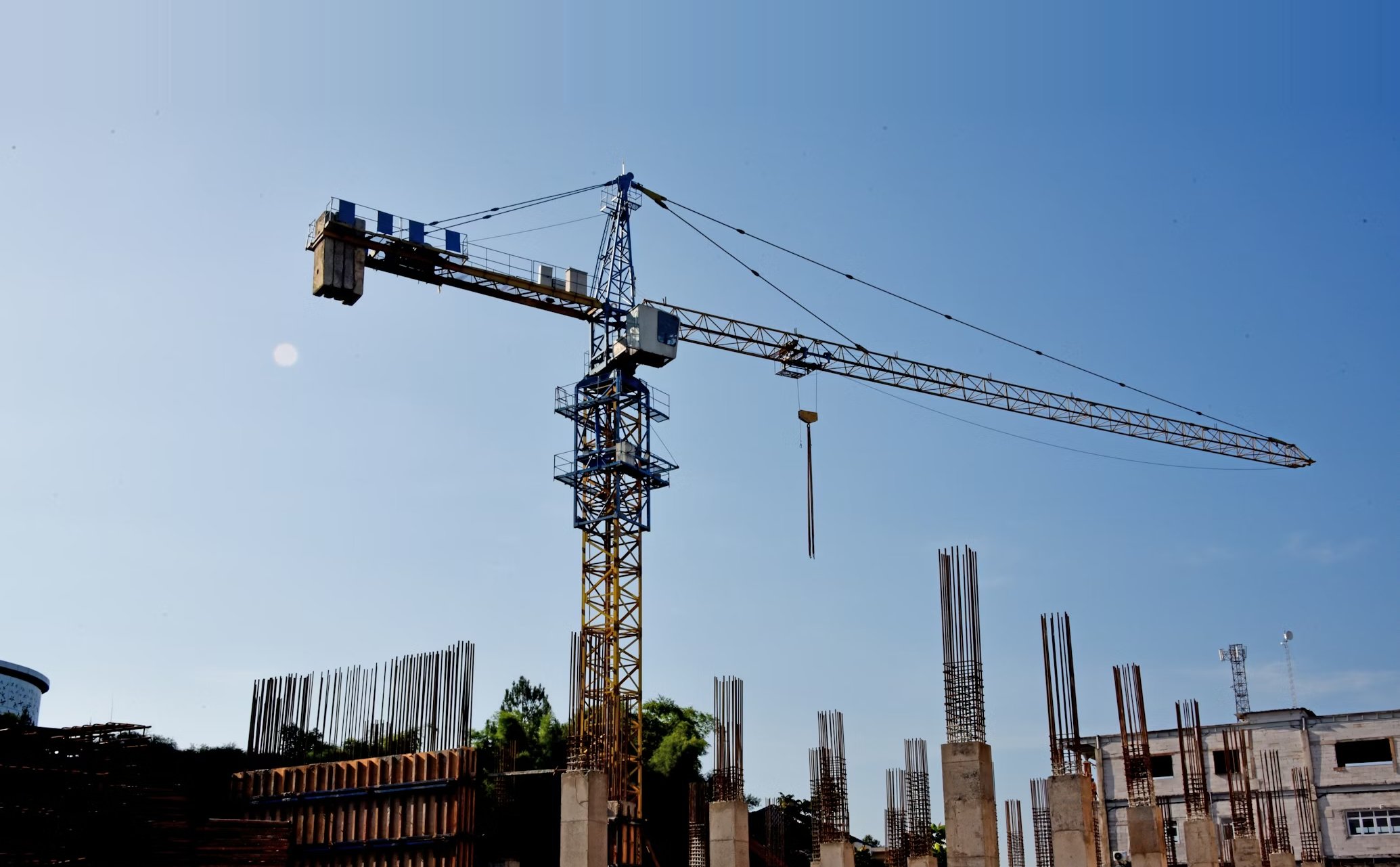
2,500 m² extension. Concrete slab, steel portal, precast walls, Kingspan envelope.
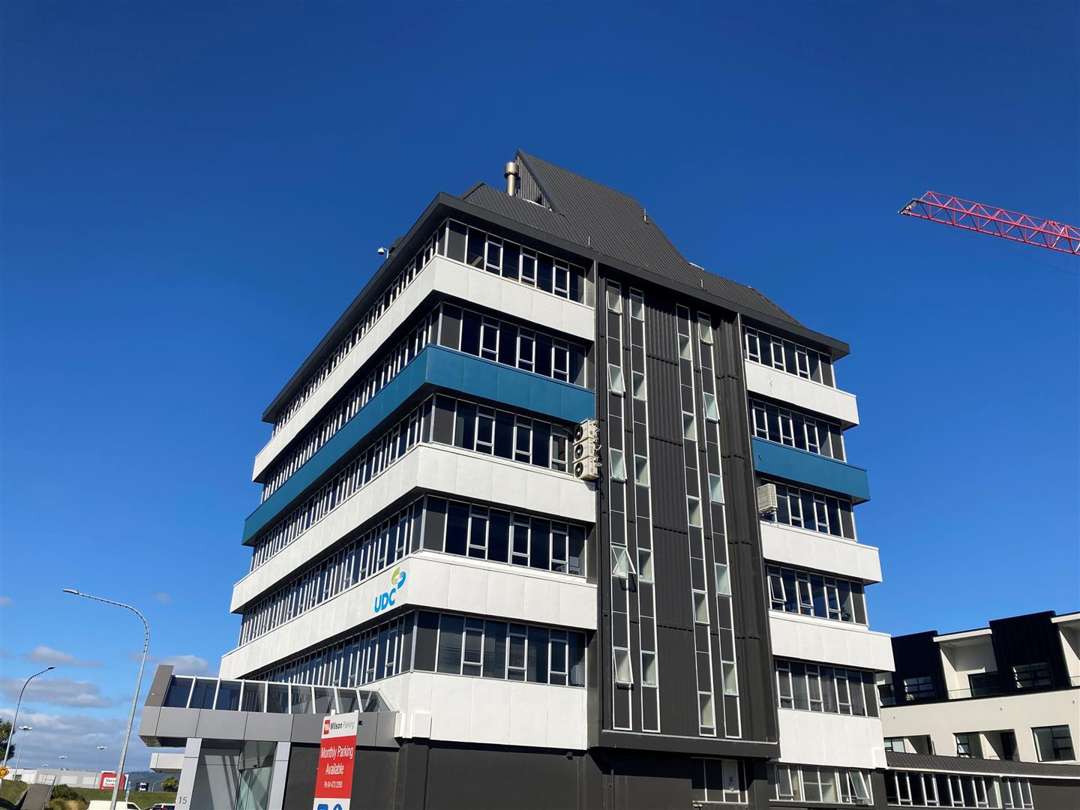
6-storey commercial fit-out and façade upgrade.
Frequently Asked Questions
What should I do if there is a dispute over a payment claim?
Two circumstances:
a. Partial payment that a Payee disagrees with
b. Zero payment
Regardless of what form of contract you signed up to, any payment issue (with minor exclusions) in construction contracts is governed by Construction Contracts Act 2002 (CCA 2002) and its amendments which have set statutory requirements for both Payers and Payees.
As a Payer, a Payment Schedule must be:
i. Issued to a Payee within a certain timeframe as per the contract (C 12.2 in NZS 3910:2013 with similarities in 3915/16/17, C12 in SA 2017, or per default 20 working days (S22) from the date on which a Payment Claim is served), or otherwise the Payer becomes liable for the full claimed amount plus one and half times of monthly SME overdraft rate (compounding) (C12.7.4) by RBNZ as per contract terms. Commercially it is likely to result in slowing down progress onsite or even suspension of work all of which impose a risk on programme as a lot of contracts have LD clauses.
ii. Giving explanations and your calculation to justify any discrepancy between claimed amount and certified amount.
As a Payee, any Payment Claim must:
iii. Be served in a CCA compliant manner to enforce its legitimacy, and
iv. Satisfy specific clauses in the contract you signed up (C 12 in special conditions 1 in NZS 3910:2013, C12 in specific conditions 1 in SA 2017).
It is worth noting, as a Payee, that legal/contractual satisfaction does NOT necessarily support commercial soundness. In the High Court case Templeton Kingsland Ltd v Dominion Constructors Ltd [2021] NZHC 2960 in which the Court ruled that a Payment Schedule with reasons — even incorrect ones was statutorily satisfied.
High Court cases have repeatedly shown Payees lost cases in which Judges found those Payment Claims did not meet statutory requirements which is highly avoidable.
Equipping your staff with the right contractual understanding and commercial expertise becomes increasingly critical for businesses to manage contract risks in the current landscape in Construction industry.
Disputes on Variations
Over the years’ experience, for lump sum contracts, most disagreements over claims were associated with Variations which are governed by three mechanisms in most forms of contract:
- Entitlement: which requires a claimant to give notification of intention to claim a variation, usually time bars applied
- Valuation: which dives down to how a variation is valuated in which communications, commercial expertise play its part — right preparation of paperwork, presenting it with the right tone would resolve majority of disagreements over Variations.
- Dispute: which requires a claimant to raise questions/challenge any disagreed variations within a certain period of time.
However, Payers and Payees should also respect the spirit and relevant clauses of the contract you are signed to when addressing any disagreement.
How do I close out a final account when the other party won't agree?
For both Payers and Claimants, the starting point is the same: Make sure your paperwork satisfies any statutory or contractual requirements, then move to commercial part if agreement is yet to be reached, which means:
As a Payee:
i. For any disagreed items, check notes on the Payment Schedule which is required to give details of how certified amount is reached. Then investigate those details which should give you clues to start with, before escalating.
ii. Making sure your claims are presented in a way complying with CCA and Clause 12 in 3910 series of contract and SA 2017.
iii. Raise it to the management of the Payer’s team sooner rather than later.
iv. For any variation, entitlement of such a claim is a key, for details, please refer to the later part of Question 1.
v. Most forms of contract (3910 series, SA 2017, NZIA) have time bars to address final account issues, which means the situation could get more difficult if those time bars are missed.
What has been neglected often is that there are time limits to raise disputes, which has left many historical disagreed Variations to final accounting stage making it harder to resolve.
As a Payer:
1. Statutorily and contractually satisfactory paperwork with respectful details based on appropriate investigation on facts would put yourself in a robust position for any conversation.
2. Further our experience found that reaching out your Payee asking for whatever specific supporting details to justify your decision and holding their hands walking through it, in most cases, will earn you incredible credit.
3. Bear in mind that unsettled final account value becomes a risk or even a hazard to settle head contract final account to satisfy time bars under 3910 series contracts (similar in NZIA). As any uncovered final account value to your Payees might become unexpected cost once the head contract is final accounted. That unexpected cost would eat into overall contract margin which might become your KPI.
4. Prudent commercial managers tend to weigh wider factors into decision making over this matter, such as across business level consideration vs contract level view, overall head contract status, public relationship (PR) etc.
New Zealand Construction industry is changing. Contractual mechanisms are playing bigger part debates: rejected variation claims due to time bar issues, claims submitted without adequate substantiation in the hope of a negotiated settlement, using adjudication as a commercial lever rather than a last resort etc. This means the cost of lack of astute commercial management on contracts is no longer a slow margin leak — it is a hazard that compounds silently and surfaces when it is too late to recover.
When do consulting firms (Architects, Engineers, Project Management) bring in a Quantity Surveyor?
Ensuring design decisions and project delivery stay within the principal’s budget gives your firm significant credibility with your clients, that is achieved by having an experienced Quantity Surveyor work alongside you.
At any point where budget certainty, contractual risk, lender’s requirements or commercial management becomes critical to your project or your client relationship. In practice, this usually falls into one of four situations:
a. Pre-contract — when your client asks, “how much will this cost?”
Designers have indicative cost guidance based on experience and cost/unit benchmarks. But when a client needs a number they can take to a bank, a board, or an investor — that number needs to be independently substantiated with a measured estimate, not a range. A Quantity Surveyor prepares cost plans at each design stage (concept, preliminary, developed, detailed), provides feedback of cost impact on any amendment of designs, and flags cost risks and find ways to manage them before they become redesign.
b. Procurement and tender — 1st layer of risk identification and management
Having appropriate procurement strategies and approach not only reduces surprising blow-out of budget that creates a tension between the principal and your business, but also promotes healthier, positive working relationship among parties which likely brings more opportunities.
Commercial Engineering on head contracts is becoming increasingly vital for principals to practically understand and control risks of budget blown out, along with Lawyer’s input in special conditions.
Experiences show that simply writing clauses to shift risks to a contract does not work out most of the times. While commercial engineering provides sufficient clarity for all parties in terms of scope of works, mechanism to deal with any ambiguities, sets up risk boundary and risk-control structure in head contracts so that all parties are well informed encouraging transparency and avoiding risks of over costing.
c. Post-contract — real-time commercial risk containment through contract administration and commercial management
This provides your business peace of mind that every conversation with your client is backed with cost certainty, and your senior people are freed to focus on building the business, working with clients.
A business-astute Quantity Surveyor supports your practice in keeping your project deliveries statutorily compliant and risk-controlled, without compromising working relationships.
d. Disputes — when agreement is yet to be reached
When a dispute surfaces on a project, the structural position is uncomfortable regardless of who is at fault and your management are managing correspondence that was never in your fee. In a market as small as New Zealand’s, the way it plays out is remembered longer than the project itself.
Your business management are backed with confidence to focus on business development knowing that an experienced Quantity Surveyor who understands how buildings are built, speaks the same language your counterparty uses, undertakes field investigation along with contractual obligations to bring commercial clarity onto the table.
At DAWNED, we believe — “An ounce of prevention is worth a pound of cure.”
How does a Quantity Surveyor add value to a property development project?
Development soundness starts from acquisition planning, not construction.
Property development looks straightforward until it isn’t — acquire land, design drafted, quotes look ok, programme locked, finance sorted, build and complete with numbers went wild while you are puzzled.
“A small leak will sink a great ship”
The leak is often invisible until the ship starts wobbling. An experienced Quantity Surveyor scrutinises numbers, translates council planning constraints into development yield and project economics, understands the dynamics of the market and supply chains, knows lender’s requirements, dives deep into contractual compliance and commercial prudence — all of which gives you assurance at each critical control point as you steer the project forward.
A Quantity Surveyor is the one who finds and fixes the leak — so that you develop your business, not just the building.
What are your approaches when assessing any insurance reinstatement claim?
When a property is damaged, the homeowner is already in a difficult position — the disruption is real, the costs are significant, and the process is unfamiliar. That context matters. At the same time, a credible assessment is one that is independent — prepared in accordance with the NZIQS Code of Ethics and built to withstand scrutiny.
In practice, this means every assessment runs from site to settlement:
a. Independent site inspection and documentation with photographs, on-site interview notes — damage and causation of damage is assessed on site, firsthand, before reviewing any existing reports.
b. Current market rates — every cost is priced at current New Zealand market rates, not outdated benchmarks.
c. A structured, traceable assessment report — scope, methodology, and pricing are documented in an itemised format that can be reviewed, challenged, and defended.
d. Face-to-face engagement — the report is not where our involvement ends. We are available to sit across the table with the other party’s QS, project manager, or legal counsel and discuss any line of the assessment.
In recent IFSO cases — including a 2023 Auckland floods dispute and a 2024 structural damage claim — the deciding factor was not the amount claimed, but whether the damage and its cause were documented with sufficient rigour to withstand scrutiny.
A well-prepared, transparent independent assessment resolves most disputes before they become legal proceedings — protecting the Insurer’s market reputation and client relationships.